


Prime Video takes us on a compelling three-part journey into the “Redhead Murders” in the docuseries Murder 101. Elizabethton, Tennessee high school sociology teacher Alex Campbell dedicated class time to delving into the series of murders, beginning with a class in 2018 and continuing with new classes for seven years. Alex fueled his students’ curiosity by asking them to work on decades-old murder cases, and what they learned about themselves and about life in general far exceeded the normal sociology class curriculum.
Alex’s classes have uncovered quite a few clues. When he began the project in 2018, it only generated a few newspaper articles at the time. The docuseries follows his 2025 class as they navigate the classroom and share their personal lives, revealing many students are underprivileged and at-risk.
(The following is a recap of episode one, and there are spoilers.)
Teacher Alex Campbell describes Elizabethton as an old-school small town in the hills of Appalachia. Episode one opens with Alex’s 2025 class listening to a police recording of an interview with Linda, a surviving victim. A very enthusiastic Alex Campbell asks his class when the victim was attacked and proving they’re paying attention, one student responds, “March 6, 1985.” Mr. Campbell points out it was during the night
The recording continues as evidence photos are shown of Linda following the attempted murder. As Linda describes her horrific attack and being strangled, one of Alex’s students points out she sounds young.
Linda told the police she was naturally a brunette but dyed her hair red. When she told her soon-to-be attacker this information, he looked at her strangely. Her reaction was to ask, “Are you mad at me?”
Linda is the only surviving victim of the Redhead Murders.
Mr. Campbell reveals he hadn’t heard much about the ‘Redhead Murders,’ stating, “These murders were happening in our own backyard. If no one remembers them, how are these cases ever going to get solved? That’s the reason I wanted to teach this case.”
Campbell believes talking to his class about the victims might help identify the killer. In late 1984, early 1985, bodies of women were popping up, and the police noticed a pattern. Campbell breaks down with the class the similarities of these murders: race, age, and the way they were murdered (by strangulation). What started as a list of 22-24 possible victims was narrowed down based on the causes of death and location. Additionally, it appears the murderer was active from late ‘84 to March ‘85. When you take those pieces and put them together, it narrows down the victim list to six or seven.
Alex firmly believes all students should be involved in project-based learning. He wants them to really care about learning. Brittany Campbell, Alex’s wife, describes her husband as a man of many trades and hobbies, but once he sets his sights on something, he is all in. He will not take no for an answer.
Throughout the docuseries, Andrew, a student interested in videography, interviews other students in Mr. Campbell’s sociology class. He’s not a true crime fan but is fascinated by filmmaking, and Alex’s class is the perfect subject.
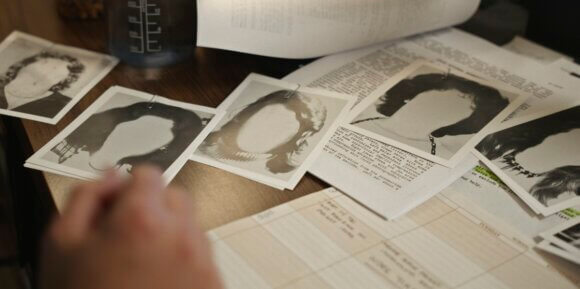
Alex talks to his class about FOIA requests and one thing his classes have never been able to get their hands on is the original medical examiner’s reports. He challenges his class to obtain the materials. (Tennessee law dictates they should be able to release the original police reports and the original autopsies.)
Andrew videos his fellow classmates as they try to track down the reports. Frustrations begin to mount when the students’ calls either go unanswered, police stations claim they don’t deal with FOIA reports, or official numbers are out of service.
Andrew interviews Will, a student of Alex’s in the 2018 class that started this investigation and he admits they didn’t get very far on the case. Will talks about trying to profile the killer and suggests that maybe there was trauma involving a redheaded woman. Will also believes the killer could be a truck driver because they found the bodies mostly near highways. Will’s father, a truck driver, says, “You could get away with being a murderer … you really can because no one was there to watch you.”
Armed with a suspect profile in 2018, the class held a press conference. Will spoke from the podium and did a remarkable job of addressing the press about this case.
Calls started coming in after the press conference suggesting the identity of the killer. But more importantly, callers provided leads on the unidentified victims. In the first break in years, DNA tests identified victim Tina Farmer’s attacker as the same man who attacked Linda. Jerry Johns was convicted in 1985 and died in prison in 2015.
Alex’s 2025 class’s FOIA requests pay off, and the class receives audio interviews that haven’t been publicly available.
Mr. Campbell discusses how people viewed Jerry Johns, who has not been connected to the other murders. His wife, Phyllis, made a shocking confession and claimed that when she met Jerry, she was unaware that he was her half-brother. It wasn’t until after she got pregnant that they were told. Phyllis talks about how intelligent and caring he was. She didn’t believe he was a murderer, but she admitted the female victims in the photos looked like her. All the women were white, small, and redheaded.
Jerry’s wife was 12 when she met him, which grosses out the class.
Mr. Campbell also plays audio from the Tennessee Bureau of Investigations agent who interviewed Jerry and saw another side of him. He claims Jerry had no soul. You could label him anything, but the bottom line is that he was evil. It was also confirmed he was a truck driver, and Jerry’s timeline shows he could have been involved in the murders.
Alex asks his class if Jerry was evil or the kind of guy who would give you the shirt off his back. Linda, the surviving victim, might be able to fill in some gaps. Alex tells Andrew to put his camera to the test and send Linda a video asking for an interview.
Andrew, Hannah, and Mr. Campbell go through Jerry’s records and discover his last name on his original birth certificate was not Johns. When the courthouse was burnt down and his mother asked for his birth certificate, she said his last name was Johns. They also uncover a long history of crimes, including arson, confirming he didn’t start off with murder.
Andrew points out that when Jerry separated from his wife, the first redheaded victim was murdered. The class and Mr. Campbell put together a timeline, and Lisa was the only victim identified at the time. She was a prostitute, and her pimp saw her getting into a truck at a truck stop.
Mr. Campbell stresses that the news articles focused on Lisa being a prostitute. “When the media devalued these women, it seemed like the world did too, and maybe that’s why these cases have been cold so long,” says Alex.
Mr. Campbell also points out that it wasn’t until his class’s plea to the public in 2018 that things started happening in these cases. And in 2022 & 2023, victims were identified through DNA. Now the class’s task is to try to figure out if Jerry Johns was a serial killer.
The first episode closes out with the beginning of a video chat with Linda, the surviving victim who appears nervous.
The post Murder 101 Episode 1 Recap: Did Jerry Johns Commit the Redhead Murders? appeared first on ShowbizJunkies.


0 Comments